Unexplained infertility
Unexplained infertility means the standard tests have not found a clear reason for difficulty conceiving. It is common, affecting around one in four couples with fertility problems. It is frustrating, but it does not mean nothing can be done: options include continuing to try for a time, IUI, and IVF, which often also reveals more about what is going on.
Written by Fertility Decoded. Reviewed by D R, MS (OBG), FRM. Review date: 31 August 2026.
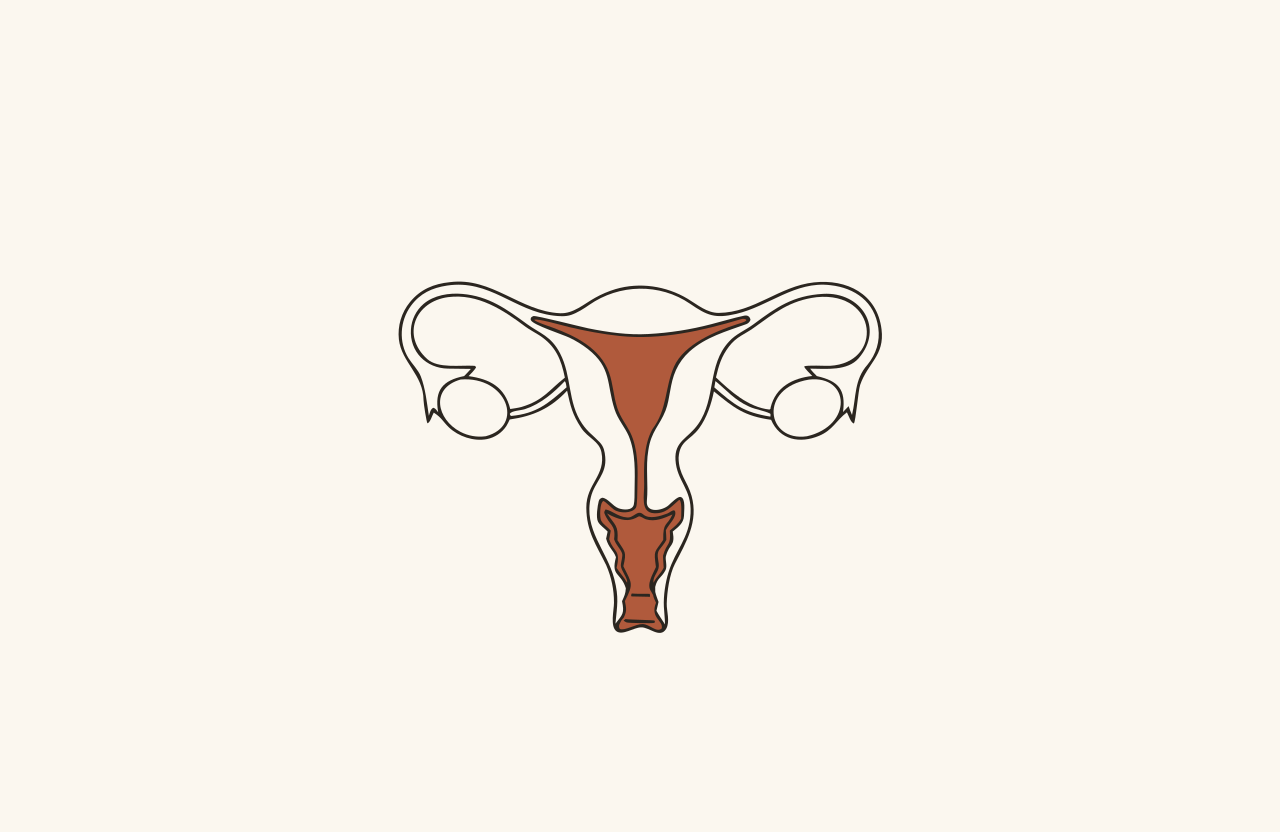
Unexplained infertility is the diagnosis when the usual tests, including ovulation checks, a semen analysis, and tubal checks, come back normal but conceiving is still not happening. It is common, given to around one in four couples with fertility problems.
A diagnosis of exclusion
It can be one of the more frustrating results, because there is no single thing to fix. It is worth keeping two things in mind: it does not mean nothing is wrong, only that standard tests have not found the cause, and it does not mean you will not conceive. Many couples with this diagnosis do, with or without treatment.
How it is managed
There is a genuine range of approaches, and guidance differs, so this is very much a discussion to have with your clinic.
- Continuing to try for a defined time (expectant management) can be reasonable, especially for younger people who have not been trying very long.
- IUI, often with medication to encourage ovulation, raises the chance of conceiving compared with simply waiting, and is less involved than IVF.
- IVF is often the most effective option, and it has a useful side effect: it can reveal things that testing could not, such as how eggs and sperm behave together.
Guidance bodies do not fully agree on the order: some recommend moving to IVF after a couple of years, while others support trying IUI first. Our IUI vs IVF vs ICSI guide can help you weigh these up before that conversation.
Sources and further reading
- ESHRE: Unexplained infertility (2023). Diagnosis of exclusion and treatment sequencing.
- WHO: Infertility guideline (2025). Evaluation and treatment pathways.
Source links checked on 7 September 2026. This source check is separate from medical review.
Related
Last updated .