Implantation failure
Implantation failure is when a transferred embryo does not attach to the uterine lining, so no pregnancy starts and the pregnancy test is negative. Repeated implantation failure is the term used when good-quality embryos fail to implant across several transfers. It has many possible causes, often the embryo itself, and it does not always have a clear or fixable reason. It is a common reason for a failed cycle rather than a diagnosis in itself.
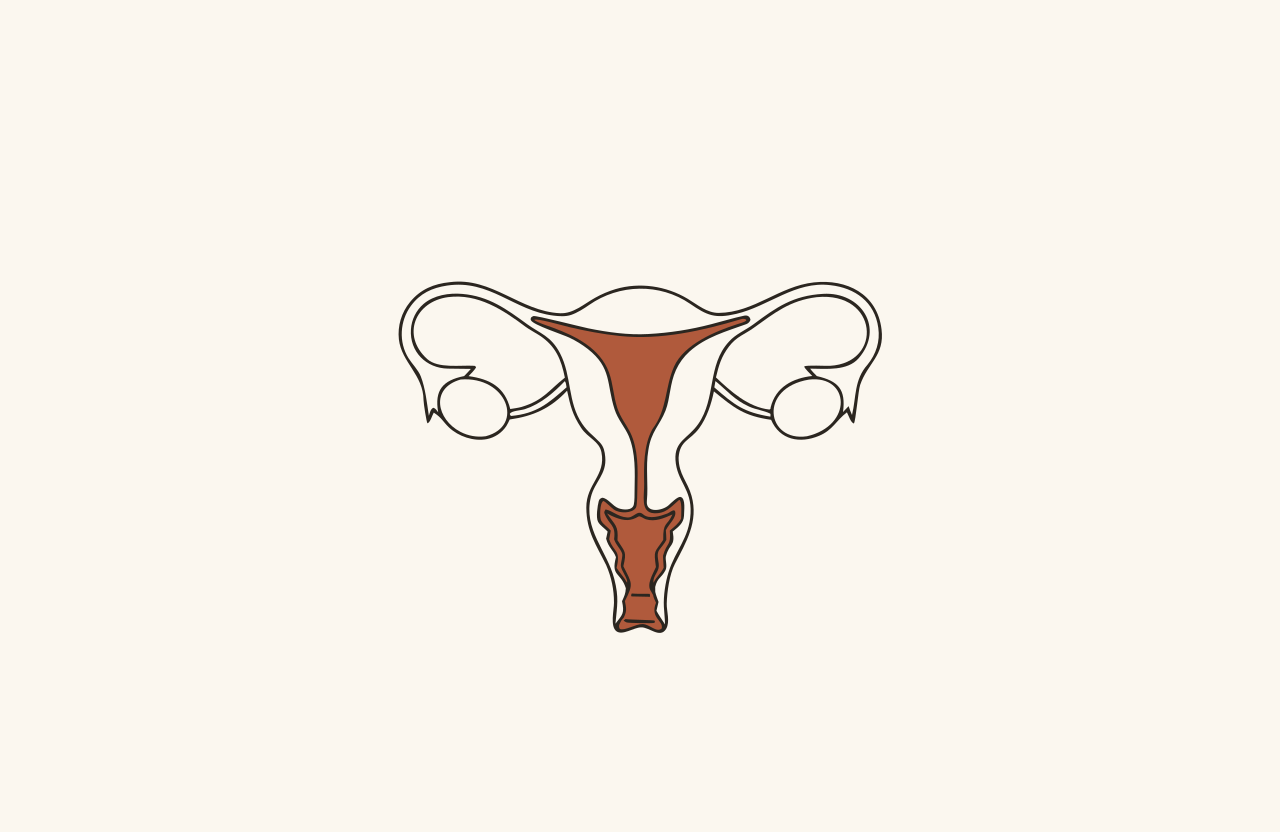
Implantation failure means a transferred embryo did not attach to the lining of the uterus, so no pregnancy began and the beta hCG test was negative. It is one of the common reasons an IVF cycle does not work.
Doctors use the term repeated implantation failure when good-looking embryos fail to implant across several transfers. It is important to know that this is a description, not a single diagnosis with one cause. The reasons range from the embryo itself (often a chromosomal issue that appearance cannot reveal) to the uterine lining or other factors, and in many cases no clear, fixable cause is found. This is also the situation where unproven IVF add-ons are most heavily marketed, so it is worth approaching new recommendations with careful questions.
Sources and further reading
- ESHRE: Recurrent implantation failure (2023). Individualised assessment.
Source links checked on 7 September 2026. This source check is separate from medical review.
Related
Last updated .