Adenomyosis
Adenomyosis is when tissue like the womb lining grows into the muscular wall of the uterus, causing it to thicken. It is common and can be symptom-free, but where it does affect fertility it is linked to lower IVF success and a higher chance of miscarriage. It often overlaps with endometriosis but is a distinct condition, diagnosed on ultrasound or MRI.
Written by Fertility Decoded. Reviewed by D R, MS (OBG), FRM. Review date: 31 August 2026.
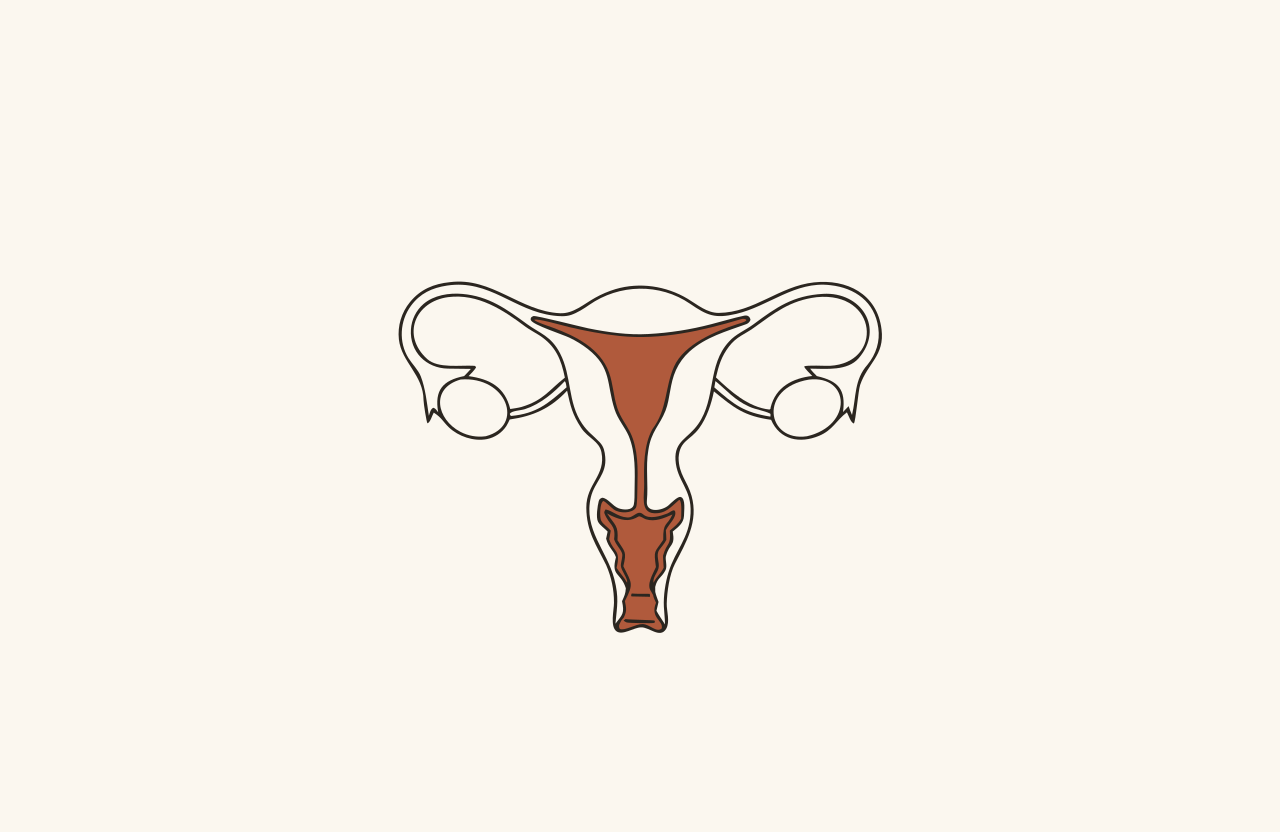
Adenomyosis is a condition where tissue similar to the lining of the uterus grows into the muscular wall of the uterus itself, rather than staying confined to the inner lining. This can cause the uterus to thicken and enlarge. It is common, thought to affect around a fifth of people at some point, and often causes no symptoms at all.
Symptoms
When it does cause symptoms, the most common are heavy periods, painful periods, and bleeding between periods. Symptoms most often show up in the late 30s to 40s, though adenomyosis can be present without any symptoms at a younger age too.
How it affects fertility
Diagnosis
Adenomyosis is usually diagnosed with a transvaginal ultrasound or an MRI, both of which are considered similarly reliable. There is no blood test for it.
Treatment options
Treatment depends on whether the main goal is symptom relief or improving fertility.
- Hormonal treatments, such as the combined pill, a progestin, or a hormone-releasing IUD, can reduce symptoms but are generally paused when trying to conceive.
- GnRH agonist treatment before an IVF cycle is the most studied fertility-focused approach, aiming to quiet the adenomyosis before a frozen embryo transfer.
- Surgery to remove affected tissue is possible in some cases but is more complex than fibroid surgery, since adenomyosis does not have a clear border with healthy tissue.
Sources and further reading
- NHS: Adenomyosis. Definition, symptoms and diagnosis.
- Adenomyosis and IVF: meta-analysis (2023), PubMed abstract. Associations with pregnancy, live birth and miscarriage; the authors graded this evidence as very low certainty.
Source links checked on 7 September 2026. This source check is separate from medical review.
Related
Last updated .