Uterine fibroids and fertility
Fibroids are common, usually non-cancerous growths in or around the uterus. Most do not affect fertility at all. What matters most is location: fibroids that bulge into the uterine cavity are the ones most likely to interfere with implantation, and those are the ones most often worth treating before trying to conceive.
Written by Fertility Decoded. Reviewed by D R, MS (OBG), FRM. Review date: 31 August 2026.
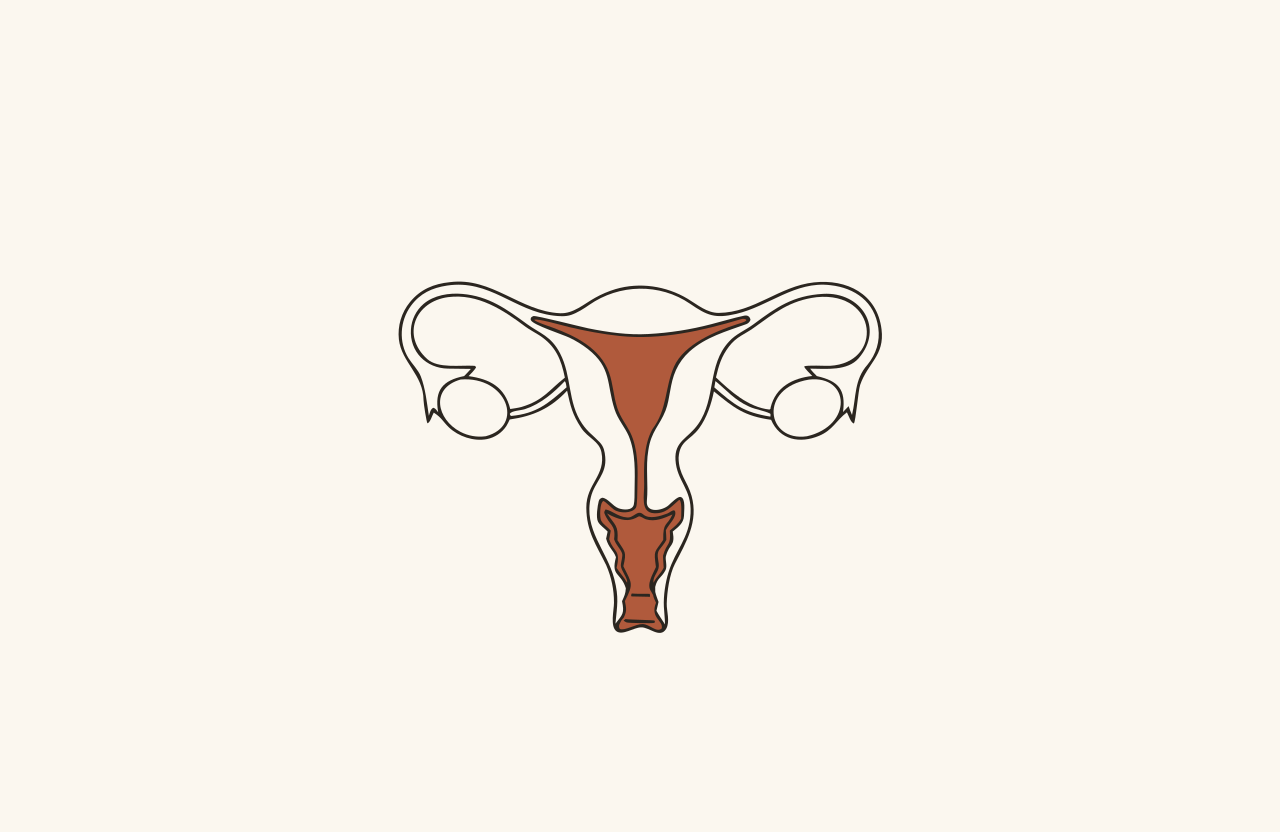
Fibroids (leiomyomas) are common, usually non-cancerous growths made of muscle and fibrous tissue that develop in or around the uterus. Many people have them without knowing, and most fibroids never affect fertility at all. Whether one matters for conceiving depends much less on its size than on exactly where it sits.
Location is what matters most
| Effect on fertility | |
|---|---|
| Submucosal (bulges into the uterine cavity) | The type most clearly linked to lower pregnancy rates; usually worth treating before trying to conceive |
| Intramural (within the muscle wall, not distorting the cavity) | Can still lower pregnancy rates, especially if large, but the evidence is less clear-cut than for submucosal fibroids |
| Subserosal (on the outer surface of the uterus) | Generally does not affect fertility and does not usually need treatment for that reason alone |
The likely reasons a cavity-distorting fibroid interferes with pregnancy include disrupting blood flow to the lining of the uterus and interfering with the signals an embryo and the lining exchange during implantation.
How they are found
Fibroids are often first noticed on a routine pelvic ultrasound. An HSG can also show a fibroid distorting the uterine cavity, since the dye pattern will look uneven around it.
Treatment options
- No treatment is reasonable for fibroids that are not in the cavity and are not causing symptoms, since they are unlikely to be the cause of difficulty conceiving.
- Myomectomy, surgery to remove the fibroid while keeping the uterus, is generally recommended for submucosal fibroids affecting the cavity, and is considered for larger or multiple intramural fibroids depending on the full picture. It can often be done hysteroscopically (through the cervix) for cavity-based fibroids, which is less invasive than open surgery.
- IVF alongside treatment is common when other factors are also present; removing a cavity-distorting fibroid first tends to improve the chances of that cycle succeeding.
Sources and further reading
- ASRM: Fibroid removal and fertility (2017). Cavity distortion and evidence for surgery.
Source links checked on 7 September 2026. This source check is separate from medical review.
Related
Last updated .