HSG test (hysterosalpingogram)
An HSG (hysterosalpingogram) is an X-ray test that uses a dye to check whether your fallopian tubes are open and whether the shape of your uterus is normal. It is one of the first tests done when investigating infertility, because a blocked tube is a common and treatable cause. The test takes about 10 to 15 minutes, is done in the first half of your cycle, and usually causes a few minutes of period-like cramping. Some evidence suggests it can also slightly raise the chance of pregnancy in the months afterwards, especially with an oil-based dye.
Written by Fertility Decoded. Reviewed by D R, MS (OBG), FRM. Review date: 31 August 2026.
An HSG, or hysterosalpingogram, is an X-ray test that checks whether your fallopian tubes are open and whether the shape of your uterus looks normal. A thin tube passes a small amount of dye through the cervix, and an X-ray follows the dye as it fills the uterine cavity and moves along the tubes. If the dye spills freely from the ends of both tubes, they are read as open. It is one of the first tests ordered in a fertility work-up, because blocked tubes stop the egg and sperm from meeting and are a treatable cause of infertility.
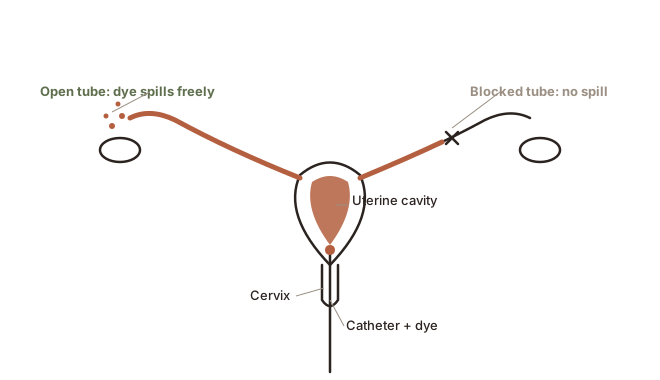
What is an HSG (full form and meaning)?
HSG stands for hysterosalpingogram: hystero (uterus), salpingo (fallopian tubes), gram (a recorded image). It is also called a tubal patency test or, informally, a "dye test". It answers two questions in one short procedure: are the fallopian tubes open, and is the shape of the uterine cavity normal? It does not assess egg numbers, and it cannot see endometriosis.
Why is an HSG done?
An HSG is usually done early in a fertility work-up to check the fallopian tubes. For a natural pregnancy, an egg released from the ovary has to meet sperm inside an open tube. If a tube is blocked, that cannot happen on that side. Because a blockage is common and changes the treatment plan (sometimes pointing straight to IVF, which bypasses the tubes entirely), it is worth knowing early. The same X-ray also shows the outline of the uterine cavity, which can reveal a septum or a fibroid distorting the cavity.
When in your cycle is an HSG done?
An HSG is done in the first half of your cycle: after your period has finished but before you ovulate, roughly days 6 to 12. This timing avoids doing the test when there could be an early pregnancy, and it is when the cervix and cavity are easiest to image. Your clinic will ask you to avoid unprotected sex between the start of that period and the test.
What happens during the procedure?
The test itself takes about 10 to 15 minutes and is normally done in a radiology room as an outpatient, without sedation.
You lie down as for a routine pelvic exam
A speculum is placed so the doctor can see the cervix.A thin catheter is passed through the cervix
A small soft tube is guided just inside the opening of the womb. This is the part that can feel like a pinch or cramp.Dye is slowly injected
A small amount of contrast dye flows in and fills the uterine cavity, then moves into the tubes.X-ray images are taken
The radiologist watches the dye on X-ray as it spreads, capturing a few images. You may be asked to change position.The catheter is removed
The whole thing is over in a few minutes. You can usually go home straight away and back to normal activity the same day.
Does an HSG hurt?
Most people feel period-like cramping for the few minutes while the dye is injected, and it usually settles quickly afterwards. Discomfort varies a lot: some feel very little, others find it sharp for a short time. Taking an over-the-counter pain reliever about an hour beforehand, if your clinic agrees, makes it more comfortable for many people.
What do the results mean? Normal HSG vs a blockage
A "normal" HSG means the dye filled a normally shaped cavity and spilled freely from both tubes into the pelvis, so the tubes are open. If the dye stops partway, or does not spill on one or both sides, that suggests a blockage, which may sit where the tube leaves the uterus or further along it.
| What the X-ray shows | What it usually means | |
|---|---|---|
| Free spill, both sides | Dye flows out of both tube ends into the pelvis | Both tubes read as open (a normal result) |
| Spill on one side only | Dye spills from one tube, stops on the other | A possible blockage on one side; the open side still allows a natural chance |
| No spill, both sides | Dye fills the cavity but does not pass out of either tube | Possible blockage on both sides, but tubal spasm can mimic this, so it is often re-checked |
| Cavity findings | An indentation, filling defect, or irregular outline | A possible septum, polyp, or fibroid distorting the cavity, worth further assessment |
Two cautions. A blockage seen on one side does not rule out pregnancy: the open side can still work. And a "both sides blocked" result on HSG is sometimes just the tubes going into brief spasm during the test rather than a true blockage, so clinics often confirm it with another method before acting on it. What your own result means is best gone through with your fertility doctor.
Side effects and what is normal afterwards
Light spotting and mild cramping for a day or two are normal. You can usually return to normal activity the same day.
Can an HSG improve your chances of pregnancy?
Possibly, in the months just after. Beyond diagnosing the tubes, the flush itself appears to have a modest treatment effect, and it is stronger with an oil-based dye than a water-based one. In a large randomised trial (the H2Oil study), 39.7% of women conceived within six months after an HSG using oil-based contrast, compared with 29.1% after water-based contrast. A 2020 Cochrane review similarly concluded that tubal flushing with oil-based contrast may increase the chances of pregnancy and live birth. The likely reason is that the flush clears debris or mucus from tubes that are open but sluggish. If this matters to you, ask your clinic which dye they use and whether an oil-based flush suits your situation.
HSG vs other ways to check the tubes
An HSG is not the only tubal test. The main alternatives:
| Test | How it checks the tubes | Notes | |
|---|---|---|---|
| HSG | X-ray with dye through the cervix | Widely available, no anaesthesia, also shows the cavity outline; brief cramping | |
| SSG / HyCoSy (saline-and-air or foam ultrasound) | Ultrasound instead of X-ray, using a saline/foam contrast | No radiation; availability depends on the clinic and operator skill | |
| Laparoscopy with dye | Keyhole surgery; dye is watched passing through the tubes directly | Most definitive and can treat problems in the same sitting, but it is surgery under anaesthesia, reserved for specific cases |
Which test is used depends on your history and what the clinic has. HSG is the common first choice because it is quick, needs no anaesthesia, and checks the cavity and tubes together.
Getting an HSG in India
In India an HSG is usually done as an outpatient radiology test, at a radiology/imaging centre or a fertility clinic with X-ray facilities, and you normally go home the same day. It is typically arranged early in a fertility work-up, before moving to treatments like IUI or IVF, often alongside a semen analysis and an AMH or antral follicle count for the overall picture.
What you pay and what is included vary widely between government hospitals and private centres, and between cities, so it is worth asking, up front, whether the quote covers the radiologist, the dye, and the images, and whether an antibiotic or pre-test scan is added. Our guide to reading an IVF cost estimate explains how to read a line item like this. Because an HSG is an early, low-risk diagnostic step, it is also a good moment to check you are with a properly registered clinic: see how to choose and verify a clinic and the clinic directory.
- HSG stands for hysterosalpingogram: hystero (uterus), salpingo (fallopian tubes), gram (a recorded image). It is an X-ray dye test that checks whether the tubes are open and the uterine cavity is normal.
- Most people feel period-like cramping for the few minutes the dye is injected, which usually settles quickly. It varies from mild to sharp. Taking an over-the-counter painkiller about an hour before, if your clinic agrees, helps many people.
- In the first half of the cycle, after your period ends and before ovulation, roughly days 6 to 12. This avoids doing the test when an early pregnancy could be present.
- Yes. The test does not prevent pregnancy that cycle, and some evidence suggests the flush can slightly raise the chance of conceiving in the following months, especially with an oil-based dye. Avoid unprotected sex only between the start of that period and the test itself.
- Usually no fasting is needed because there is no sedation, but follow your clinic's specific instructions. Some clinics advise a painkiller beforehand and may prescribe a short course of antibiotics in certain cases.
- It is a routine, low-risk test. Brief cramping and light spotting are common. Infection is uncommon; contact your clinic if you develop a fever, heavy bleeding, foul-smelling discharge, or severe pain afterwards.
What is the full form of HSG?
Is an HSG painful?
Which day of the cycle is an HSG done?
Can I get pregnant in the same cycle as an HSG?
Do I need to fast before an HSG?
Is an HSG safe?
Sources and further reading
- ASRM: Fertility evaluation (2021). Tubal patency and test limitations.
- H2Oil trial analysis (2019). The 39.7% and 29.1% figures concern ongoing pregnancy within six months in the studied population.
These clinical references do not establish Indian prices, availability, eligibility, or a particular clinic's results.
Source links checked on 7 September 2026. This source check is separate from medical review.
Related
Last updated .