Monitoring scans during an IVF cycle
Monitoring scans, also called follicle tracking or folliculometry, are the short ultrasound checks done through the stimulation part of an IVF cycle. They measure how many follicles are growing and how big they are, usually alongside blood hormone tests, so the clinic can adjust your injection dose and time the trigger shot precisely. Most cycles involve about three to five scans over roughly two weeks. They are quick, usually internal, and are how the clinic keeps the cycle safe and on track.
Written by Fertility Decoded. Reviewed by D R, MS (OBG), FRM. Review date: 31 August 2026.
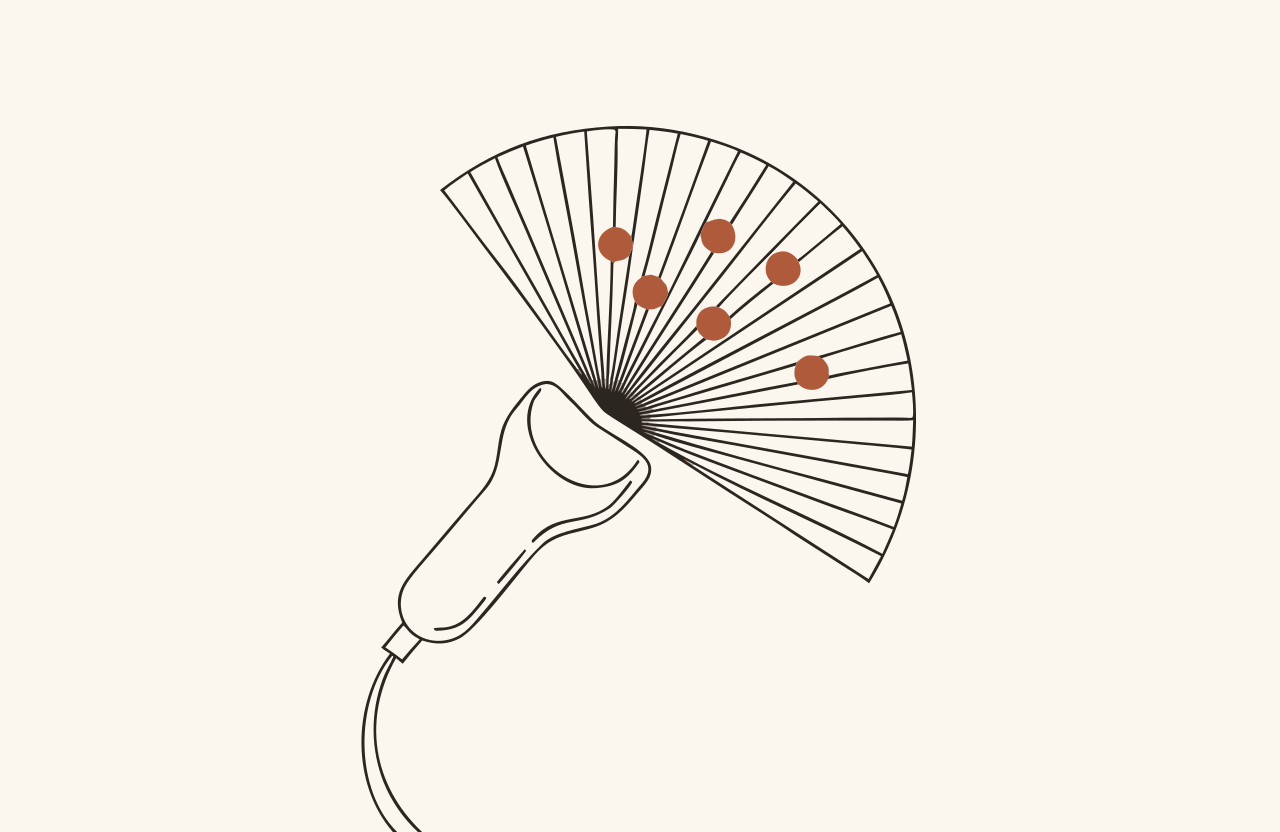
Monitoring scans are the series of short ultrasounds you have while taking stimulation injections. They are also called follicle tracking or folliculometry. Their job is simple: to watch how your ovaries are responding, so the clinic can adjust the plan in real time rather than guessing.
What they measure
During stimulation, the aim is to grow several follicles, each holding an egg. Each scan counts the growing follicles and measures their size in millimetres, and also checks the thickness of the uterine lining. These scans are usually paired with blood tests for hormones like estrogen, which together give a fuller picture than either alone.
From this the clinic decides three things: whether your injection dose needs changing, whether you are at risk of over- or under-responding, and when the follicles are mature enough for the trigger shot, which is timed about 36 hours before egg retrieval.
What to expect
Baseline scan
Day 1 to 3
Often done before stimulation starts, to check the ovaries are quiet and count the antral follicles.First monitoring scan
~Day 5 to 6
A few days into the injections, to see the early response.Further scans
Every one to three days as the follicles grow, with the dose adjusted as needed.Trigger decision
~Day 10 to 14
When enough follicles reach roughly 17 to 20 mm, the trigger is timed for that evening.
Most cycles need about three to five scans, though a slower or faster response can mean more or fewer. The scans are usually transvaginal (an internal probe), which gives the clearest view of the ovaries and is quick, though not always comfortable. You can empty your bladder first for a transvaginal scan, unlike an abdominal one. Ask your clinic whether each monitoring scan and its paired blood tests are included in your package price or billed separately, since this varies between clinics in India and the visits add up across a cycle. If you are travelling in from another city, plan around the fact that the scan schedule cannot be fully fixed in advance, because it depends on how your body responds.
- Usually about three to five during a stimulation cycle, though the exact number depends on how your ovaries respond. A slower response may need a few more; the clinic decides scan by scan.
- Most monitoring scans are transvaginal, using a thin internal probe, because it gives the clearest view of the ovaries and follicles. They are quick, and you do not need a full bladder as you would for an abdominal scan.
- Not necessarily. Follicle numbers and sizes shift as they grow, and some follicles catch up while others lead. The clinic looks at the overall trend and your hormone levels, not a single number, to guide dose and timing.
How many scans will I need?
Are the scans internal?
My follicle count changed between scans. Is that bad?
Sources and further reading
- ESHRE: Ovarian stimulation guideline (2025). Monitoring and trigger decisions.
These clinical references do not establish Indian prices, availability, eligibility, or a particular clinic's results.
Source links checked on 7 September 2026. This source check is separate from medical review.
Related
Last updated .