Fertility preservation (egg, sperm, and embryo freezing)
Fertility preservation freezes eggs, sperm, or embryos now so they can be used later, either for medical reasons, such as before cancer treatment that could harm fertility, or by personal choice, most often to delay childbearing. Success later depends heavily on age at freezing: eggs frozen at or before 35 lead to a live birth far more often than eggs frozen after 40, and clinics can estimate roughly how many eggs a given chance of a future birth needs.
Written by Fertility Decoded. Reviewed by D R, MS (OBG), FRM. Review date: 31 August 2026.
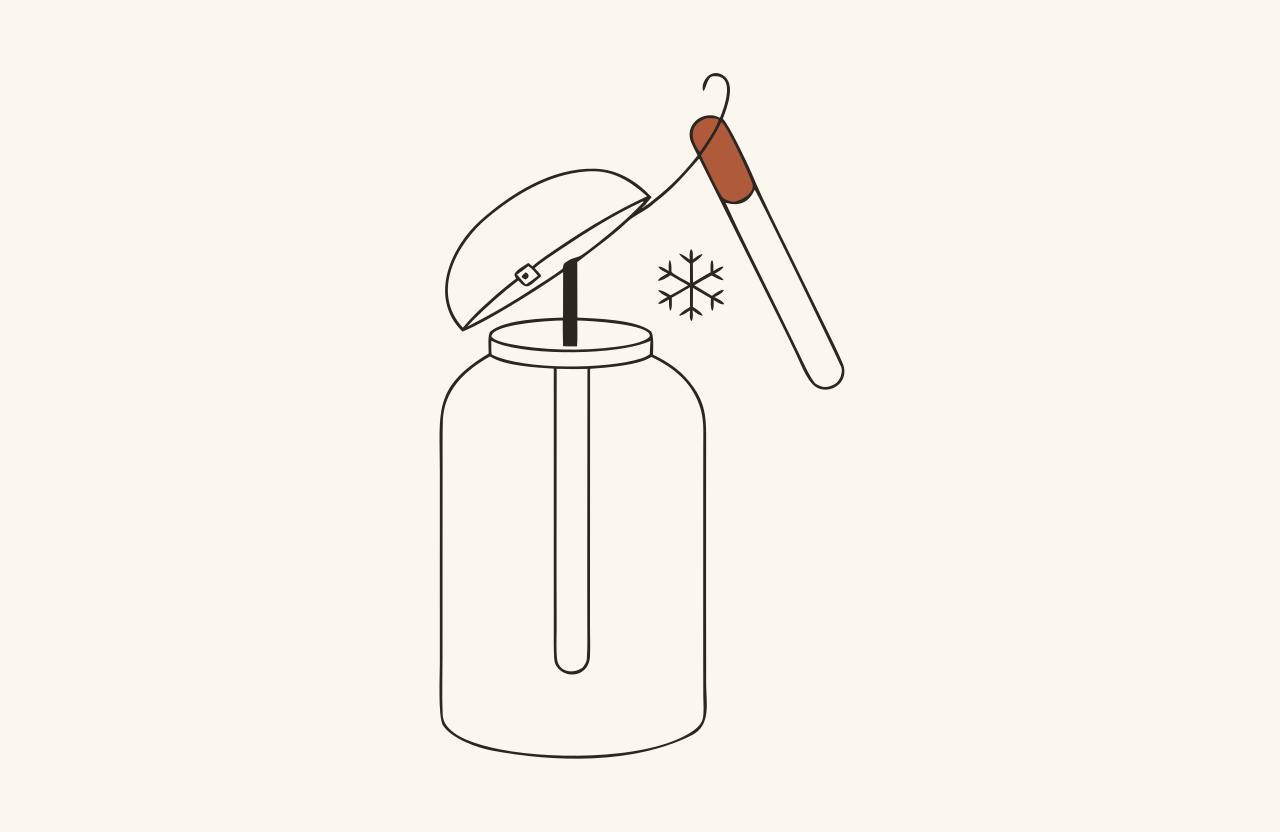
Fertility preservation freezes eggs, sperm, or embryos so they can be used in fertility treatment at a later date. It is done for medical reasons, such as before chemotherapy, radiation, or surgery that could affect fertility, and by personal choice, most often to delay childbearing while keeping younger, healthier eggs or sperm in reserve.
Who uses it
Medical reasons include a cancer diagnosis requiring treatment that can damage the ovaries or testes, some autoimmune conditions treated with similar medications, and gender-affirming hormone therapy or surgery. Elective reasons include not yet having a partner, focusing on career or other life plans, or simply wanting the option preserved while younger. Egg and sperm freezing do not require a partner at the time; embryo freezing does, since it needs both an egg and sperm.
How it works
Egg freezing uses the same ovarian stimulation and retrieval procedure as the first stage of IVF, but the eggs are frozen unfertilised (vitrified) rather than combined with sperm. Sperm freezing is much simpler: a sample is collected and frozen, usually in one visit, sometimes over a few sessions for a larger reserve. Embryo freezing follows a full IVF cycle through fertilisation, and the resulting embryos are frozen rather than transferred that cycle.
What the numbers realistically look like
An AMH test and an antral follicle count beforehand help a clinic estimate how many eggs a stimulation cycle is likely to yield, which is useful for deciding whether one cycle is likely to be enough.
Storage in India
Under the ART (Regulation) Act 2021, frozen gametes and embryos can normally be stored for up to 10 years. If you want to extend beyond that, the clinic must be notified at least six months before the storage period ends. After the storage period, unused material must be donated for research or allowed to perish, depending on the consent given.
Cost in India
Egg freezing commonly costs about 1.5 to 2.5 lakh rupees for the stimulation and retrieval cycle, plus ongoing storage fees that vary widely by clinic, from a few thousand to tens of thousands of rupees a year. Using the eggs later adds the cost of thawing, fertilisation, and transfer, similar to an IVF cycle. Sperm freezing is far cheaper, usually a small fraction of this.
Questions worth asking
Ask a clinic how many eggs they expect to retrieve for someone your age and AMH level, what their thaw survival and fertilisation rates have been, what the storage costs will be year to year, and what happens to stored material if you do not use it or if the clinic closes. Our questions to ask your clinic page has the wider checklist.
Sources and further reading
- HFEA: Egg freezing. Egg freezing and its limitations.
These clinical references do not establish Indian prices, availability, eligibility, or a particular clinic's results.
Source links checked on 7 September 2026. This source check is separate from medical review.
Related
Last updated .