Male-factor infertility
Male-factor infertility means a problem with sperm is contributing to difficulty conceiving. It is involved in roughly half of all cases, which is why both partners should be tested early. The main test is a semen analysis. Many causes are treatable, with options ranging from lifestyle changes to IUI and IVF with ICSI.
Written by Fertility Decoded. Reviewed by D R, MS (OBG), FRM. Review date: 31 August 2026.
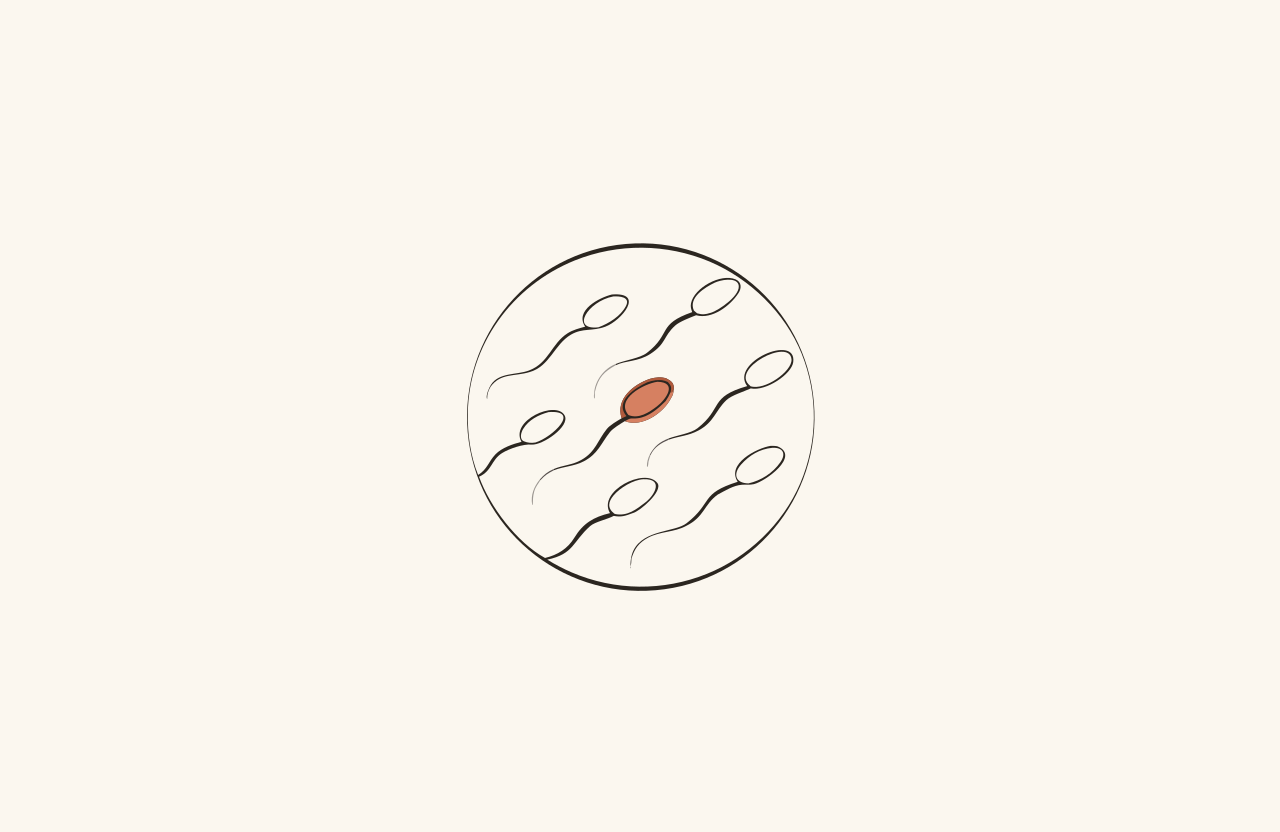
Male-factor infertility is when something to do with sperm is part of the reason a couple is having trouble conceiving. It is common, playing a role in roughly half of all cases, either on its own or alongside a female-factor cause. That is why testing both partners early matters: it avoids months spent looking in only one direction.
Common causes
The usual issues are a low sperm count, poor movement (motility), or a high share of abnormally shaped sperm (morphology). Behind these can sit a range of causes, including a varicocele, hormonal imbalances, blockages, infections, and lifestyle factors such as smoking, heavy drinking, heat, and being significantly overweight. In some cases there is no measurable sperm in the semen (azoospermia).
How it is diagnosed
The main test is a semen analysis, which measures count, movement, and shape against reference limits. Because results vary between samples, a single low result is usually repeated before any conclusion is drawn. Sometimes hormone blood tests or a scan are added.
Treatment options
Many causes are treatable, and the right approach depends on the cause and how significant it is.
- Lifestyle changes can improve sperm quality over a few months.
- Treating an underlying cause, such as a hormonal problem or in some cases a varicocele, can help.
- IUI can work for mild issues, by concentrating the best sperm.
- IVF with ICSI is the usual route for more significant male-factor problems, since a single sperm is injected into each egg. Even where there is no sperm in the semen, it can sometimes be retrieved directly.
Sources and further reading
- AUA/ASRM: Diagnosis and treatment of infertility in men, part I (2020). Evaluation of male-factor infertility, assessment of both partners, and interpretation of semen analysis.
- AUA/ASRM: Diagnosis and treatment of infertility in men, part II (2021). Treatment options for specific causes, including selected surgical treatments and assisted reproduction.
These are international clinical references, not Indian prevalence or clinic outcome data. Source links checked on 7 September 2026; this is separate from the medical review date shown above.
Related
Last updated .